How AI Serves Customers in 95 Languages
Multilingual customer support is no longer optional in today’s global market. Most customers don’t think in English — they think in their own language. And when your business doesn’t speak it, they don’t complain — they leave.

Content List

According to CSA Research, 76% of online shoppers are more likely to buy when content is available in their native language. Despite this, many businesses still operate with single-language support, not by choice, but due to cost and operational limits.
That’s where AI has changed the game.
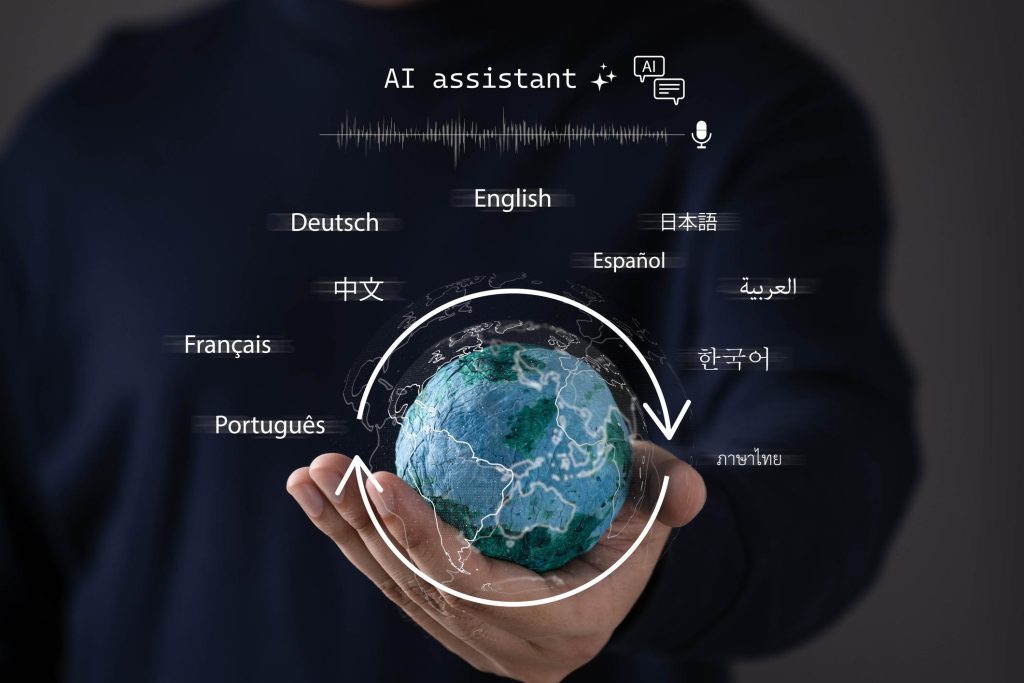
In 2026, multilingual customer support is no longer expensive or complex. With the right AI solution, businesses can now support customers in up to 95 languages — instantly and at scale.
What Multilingual Customer Support Means Today
Multilingual support is often misunderstood as simple translation.
In reality, effective multilingual customer service requires three key capabilities:
- Understanding customer intent in any language
- Responding naturally and accurately
- Using your business content as the source of truth
Traditional approaches struggle to achieve this balance:
- Manual translation is slow and inconsistent
- Human agents are accurate but expensive and limited
- Basic translation tools often lose meaning and context
Modern AI chatbots solve this differently.
With MultiChat365, a single chatbot can be trained on your website, product catalog, and FAQs — then respond to customers across 95 languages with context-aware answers.
Why Multilingual Support Is Now Essential
Global commerce has shifted.
Customers today expect:
- Instant replies
- Accurate information
- Communication in their preferred language
At the same time:
- Non-English users dominate global traffic
- International expansion is easier than ever
- Competition is no longer local
The result is clear:
If your business only supports one language, you are limiting your growth potential.
The Cost of Staying Single-Language
Many businesses underestimate the cost of not offering multilingual support.
Here’s what typically happens:
- International visitors leave without converting
- Customer trust drops due to poor communication
- Competitors with localized support win the sale
This impact is especially significant in:
- eCommerce
- SaaS platforms
- Retail and tourism-driven businesses
Language is no longer just a communication tool — it directly affects revenue.
Turning Support Into a Growth Channel
Businesses that adopt multilingual AI are seeing measurable results.
By implementing MultiChat365, companies can:
- Instantly assist customers from different regions
- Reduce response time to near zero
- Capture demand that was previously lost
Instead of being a cost center, customer support becomes a revenue-generating channel.
How AI Chatbots Handle Multiple Languages
Older systems rely heavily on translation processes:
Customer message → translated → processed → translated back
This often leads to:
- Delays
- Inaccurate responses
- Robotic tone
Modern AI works differently.
It understands and generates language natively.
For example:
A customer asks a question in Spanish → the AI understands the intent directly → retrieves relevant information → responds naturally in Spanish.
With MultiChat365, this process happens instantly, without additional configuration.
Automatic Language Detection
Customers do not want to select their language manually.
They simply start typing.
A modern chatbot must:
- Detect the language automatically
- Respond in the same language
- Maintain consistency throughout the conversation
MultiChat365 handles all of this seamlessly, across all supported languages.
Human Support vs AI: Cost Comparison
Providing multilingual support through human agents requires:
- Hiring for each language
- Managing shifts for 24/7 coverage
- Ongoing training and operational overhead
Even a small multilingual team can cost hundreds of thousands annually.
AI changes the cost structure entirely.
With MultiChat365:
- 95 languages included
- 24/7 availability
- Flat monthly pricing
Businesses can dramatically reduce cost while expanding their global reach.
What to Look for in a Multilingual Chatbot
Not all solutions are built the same.
When evaluating a multilingual chatbot, consider the following:
1. True Language Understanding
It should understand intent, not just translate text
2. Automatic Detection
No need for users to choose a language
3. Training on Your Content
Responses should be based on your actual business data
4. Scalable Language Support
Adding more languages should not increase complexity
5. Human Escalation
Seamless handoff when needed
6. Predictable Pricing
Avoid usage-based cost spikes
Conclusion
Multilingual customer support is no longer optional.
It is a baseline expectation in a global market.
Businesses that adopt AI-driven multilingual support can:
- Serve customers worldwide
- Improve conversion rates
- Reduce operational costs
- Scale without increasing headcount
With MultiChat365, what used to require a large support team can now be achieved with a single AI-powered system.
Start exploring how multilingual AI can transform your customer experience.
Try MultiChat365 and see how quickly you can go from single-language support to serving customers globally — in 95 languages, 24/7.